Issue #8

Hello and Welcome to issue number 8 of “The 3”, where each issue contains precisely three resources related to Software Development & Productivity.
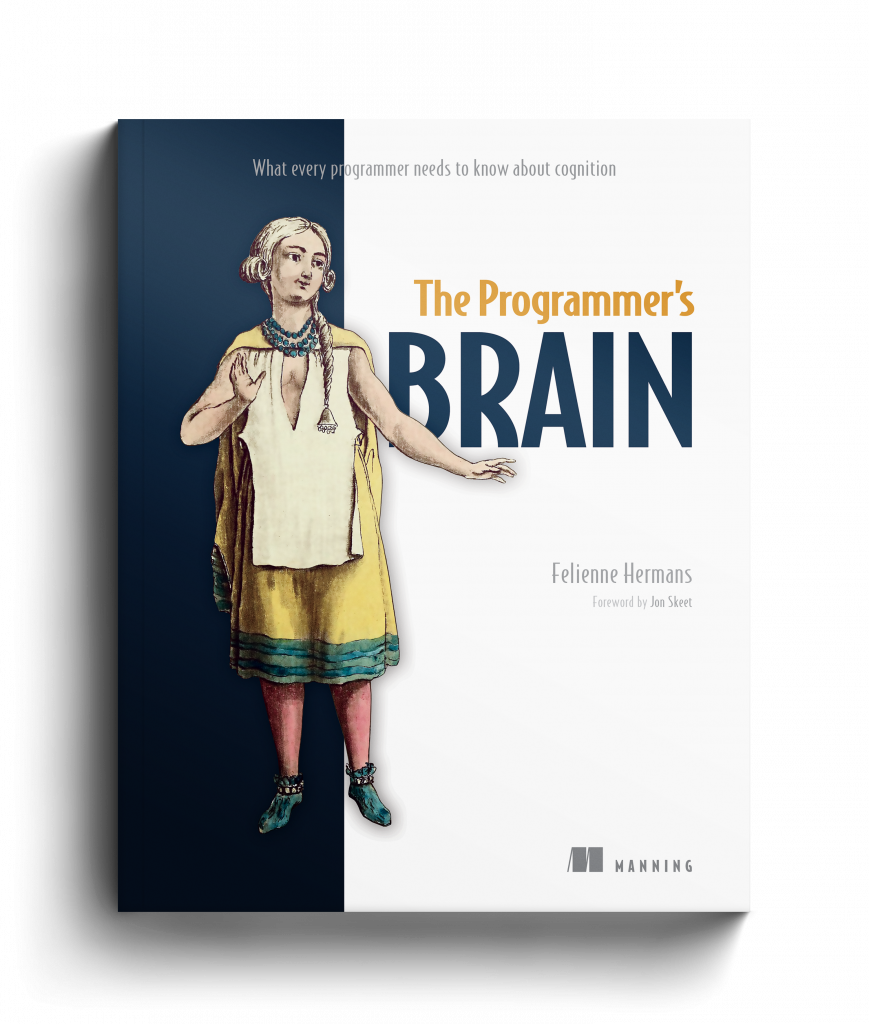
The Programmer's Brain - What every programmer needs to know about cognition
MIT Professor Harold Abelson, who’s one of the authors of the classic book (I hope to read it this year) “Structure and Interpretation of Computer Programs” said:
“Programs must be written for people to read, and only incidentally for machines to execute.”
Many books have been written about clean code, flexible code, etc. However, “The Programmer’s Brain” book is different; it tackles different angles of reducing cognitive load. In other words, how can we minimize our consumed brain energy? What makes a piece of code easier to reason about, and how to code that would make others’ lives’ (or our future self) easier to read in the future? The book assumes no prior knowledge about cognition, so any developer could pick it up.
Each chapter builds on the previous ones and focuses on how the cognitive cost can be reduced while reading or writing code. What’s unique about this book is that the suggestions and guidelines are backed by research.
But, of course, part of the things are not pure math. In the end, each individual might see things a bit differently. However, I think that’s part of the reasons that make programming a craft—being aware of how the brain functions can be taken to our advantage.
I highly recommend that book, and I’d argue it should be a must-read for any developer.
GitHub’s new sponsors-only repositories
This seemingly mundane piece could prompt a dramatic change in the Open-Source world. Almost any existing software written today is reliant to some extent (mainly to a great extent) on Open-Source code written by other developers.
In most cases, Open-Source code will be developed by people working on it for free during their spare time. These people put their heart and soul into these projects, and besides not being compensated at all, they have to deal with toxic people to who they owe nothing.
It’s not rare that developers give up on their Open-Source projects due to not being rewarded appropriately (financially and lack of respect).
Slowly but surely, this broken reality shifts toward a more fair model where developers could get funded for their work. First, GitHub came up with the GitHub Sponsors (other more general-purpose platforms existed before, such as Patreon).
Now it’s the next step. Open-Source maintainers could make their Open-Source code private and grant access only to Sponsors.
No one knows how things will play out. To me, it seems like an excellent direction for the Open-Source world.
If you liked this article, check this one as well: Death of an Open Source Business Model.
Raycast - a blazingly fast, totally extendable launcher
Any Mac user is familiar with the Spotlight launcher that ships with macOS. Many users (and I’m one of them) choose to replace it with another launcher.
Ever since I’ve become a Mac user, I’ve extensively used the Alfred productivity app. Recently, I’ve come across a new tool called Raycast, which is very similar to Alfred but feels a bit more refined and modern. Both tools fall under the category of “Launcher”.
It essentially means that the tools make it easy:
Launch an application.
Look for a file.
Manage the Clipboard.
Store snippets.
Text Expansion.
Use plugins such as: killing a process, looking for the current time, and many more.
I still love Alfred, but I think Raycast might be the next generation.
First, Raycast plugins are coded in TypeScript and React (instead of the Alfred Workflows), giving a lot of flexibility and a big pool of potential developers for coding plugins.
Second, Raycast plugins are managed in a dedicated store (Alfred has no Store/Marketplace).