Issue #10

How many hours do I really work in a day?
As promised at the end of the previous Newsletter issue, let’s talk about how many hours one should expect to be able to do deep work in a day.
For me, the sweet spot falls between 4 to 5 hours. Sometimes I’m able to work more, but the next day I’ll probably work a bit less. Also, the level on which I have to focus matters. If the task is more mentally demanding, then clocking up 4 hours could turn out much more challenging than working more than 5 hours in a bit less brain-taxing task.
It goes without saying that measuring people by the number of hours they put in is quite irrelevant. Not only because quality must come first but also because some tasks require much more brain energy.
Even if we take breaks to recharge during the day, exercise regularly, eat healthily, and have high-quality nights of sleep (or even after-noon naps) - we still have a finite amount of energy supply that depletes as the day moves forward.
It’d probably come as a surprise to many that most people maintain focus for less than 4 hours a day.
This report says the following:
“Based on data from 250K+ developers in our global community, developers code 52 minutes daily — about 4 hours and 21 minutes during a normal workweek from Monday to Friday.¹”
Another quote from the article:
“In a 2019 ActiveState Survey, over 75% of developers reported spending more than two hours per day coding. Survey data is prone to respondent biases; our findings indicate that developers spend less time actively coding than they perceive.”
I’ve also asked ChatGPT the following:
Q: How many hours can a person focus deeply in a day?
A: “… On average, most people can maintain focused attention for about 2 to 4 hours a day. It is important to take regular breaks and engage in activities that help to re-energize the brain to maintain focus and productivity throughout the day.”
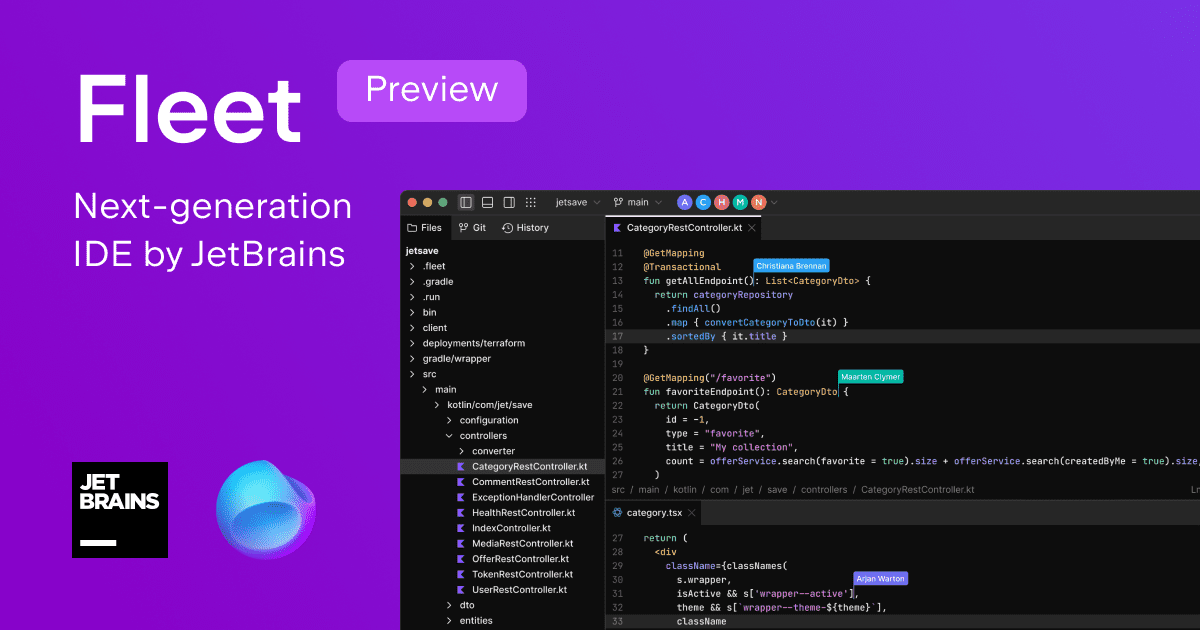
Introducing the Fleet Public Preview
The vast majority of developers use either VSCode or one of JetBrains’ products as their main IDE (IntelliJ or others). While IntelliJ is a very powerful IDE, many consider it to be a bit heavy (in terms of performance). Also, many choose VSCode thanks to its UI, which they feel is smoother and more modern.
Fleet seems to be JetBrains’ answer to its IDEs’ current weak points. It’s a lightweight IDE very similar to VSCode, with a UI written from scratch using Kotlin (which was invented inside JetBrains itself) with some of its core parts written in Rust!
The IDE is in public preview, it’s still in its early days, but it’s highly likely that it will become very popular in the years to come. It would be interesting to see whether JetBrains would make it its main IDE while slowly shifting its focus from its existing IDEs.
Amphetamine - A Powerful keep-awake utility for macOS
My work setup includes two screens. And if you’re like me, I love to keep my Mac lid closed. If you don’t want your computer to go to sleep and stay awake for as long as you ask it for (even forever), then this free utility does the job great.